
Quick Answer
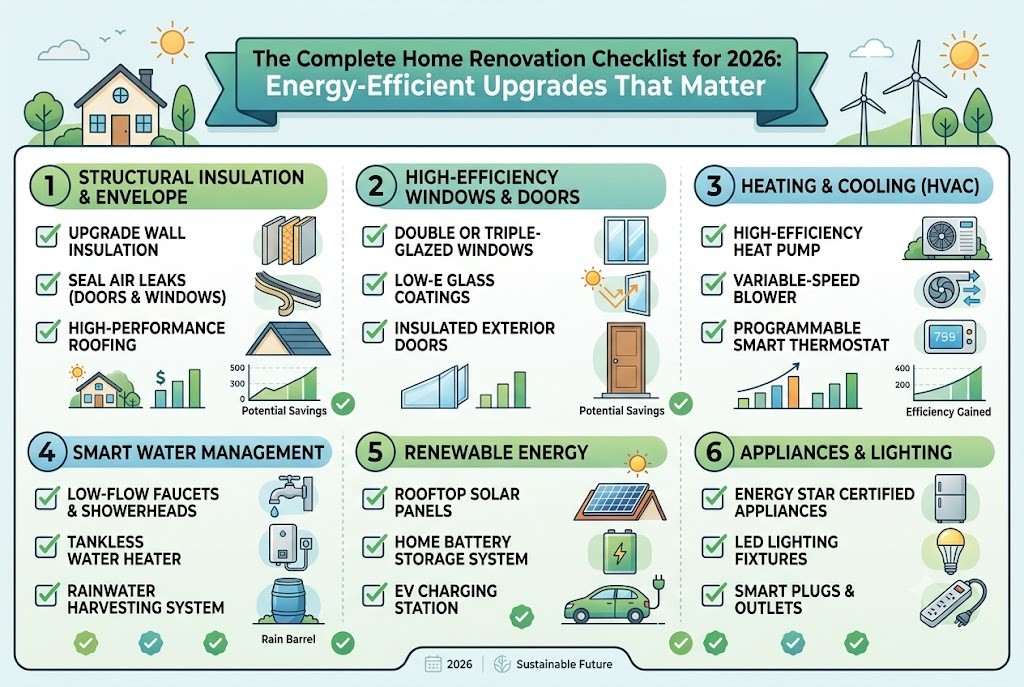
A solid 2026 home renovation checklist should follow four phases: planning and budgeting, permits and inspections, energy-efficient upgrades (insulation, windows, HVAC, appliances), and finishing touches. Energy-efficient upgrades — particularly attic insulation, air sealing, and ENERGY STAR-rated windows — consistently deliver the fastest payback of any renovation category, since they lower monthly utility costs immediately after installation while also improving year-round comfort.
Key Facts Table
| Checklist Phase | Key Actions | Typical Timeframe |
|---|---|---|
| Planning & Budgeting | Define scope, set budget, get quotes | 2–4 weeks |
| Permits & Inspections | Apply for permits, schedule inspections | 1–6 weeks (varies by municipality) |
| Energy-Efficient Upgrades | Insulation, windows, HVAC, appliances | 1–4 weeks |
| Finishing Touches | Paint, fixtures, final walkthrough | 1–2 weeks |
Introduction
A renovation without a checklist is how projects run over budget and past deadline. At Home Improvements, we’ve seen firsthand that the homeowners who plan methodically — phase by phase — finish faster and spend less than those who dive in without a roadmap. For 2026, energy efficiency has moved from a “nice extra” to a core renovation priority, driven by rising utility costs and growing interest in sustainable living. This guide lays out a complete home renovation checklist with a strong focus on the energy-efficient upgrades worth prioritizing this year.
Phase 1: Planning and Budgeting
Define Your Scope
Write down every room and system involved in the renovation before requesting quotes. Vague scopes lead to inaccurate estimates and mid-project cost surges.
Set a Realistic Budget
Include a contingency of 10–20% for unexpected issues — a standard recommendation across the remodeling industry, since older homes frequently reveal hidden problems like outdated wiring or water damage once walls are opened.
Get Multiple Quotes
Collect at least three itemized quotes from licensed contractors to compare labor, materials, and timeline estimates fairly.
Phase 2: Permits and Inspections
Most structural, electrical, plumbing, and major HVAC work requires permits from your local building department. Skipping permits can create problems at resale, since unpermitted work often must be disclosed and may need to be redone to code. Check with your municipality early, since permit approval timelines vary significantly by region.
Phase 3: Energy-Efficient Home Upgrades
Air Sealing and Insulation
The U.S. Department of Energy identifies air sealing and insulation as among the most cost-effective energy efficiency improvements available to homeowners, often paying for themselves through reduced heating and cooling costs.
Step-by-step: Basic attic air sealing
- Identify gaps around pipes, wiring, and recessed lighting.
- Seal gaps with fire-rated caulk or spray foam.
- Add weatherstripping around the attic access hatch.
- Install or top up insulation to your region’s recommended R-value.
- Verify with a follow-up inspection or thermal check.
ENERGY STAR Windows and Doors
ENERGY STAR-certified windows are independently tested to meet efficiency standards that reduce heat transfer, which can lower heating and cooling costs meaningfully depending on climate zone and existing window condition.
High-Efficiency HVAC Systems
Modern heat pumps and high-SEER HVAC systems use significantly less energy than older units. The Department of Energy notes that heat pumps can be considerably more efficient than standard furnaces in moderate climates.
Energy-Efficient Appliances
Replacing old appliances with ENERGY STAR-rated models reduces electricity draw for high-use items like refrigerators, dishwashers, and washing machines.
Phase 4: Finishing Touches
- Final paint and trim work
- Fixture and hardware installation
- Deep clean and walkthrough inspection
- Final contractor sign-off and warranty documentation
Comparison: Standard vs. Energy-Efficient Renovation Choices
| Upgrade | Standard Option | Energy-Efficient Option | Payback Benefit |
|---|---|---|---|
| Windows | Single-pane, older double-pane | ENERGY STAR double/triple-pane | Lower heating/cooling loss |
| Insulation | Minimal or outdated | Upgraded to regional R-value | Reduced HVAC strain |
| HVAC | Standard-efficiency furnace/AC | High-SEER heat pump | Lower energy bills |
| Appliances | Standard models | ENERGY STAR-rated | Reduced electricity use |
| Lighting | Incandescent | LED | Lower energy draw, longer lifespan |
Frequently Asked Questions
What should be the first step in a home renovation checklist? Start with planning and budgeting — define the full scope of work and set a realistic budget with a contingency buffer before requesting contractor quotes.
Which energy-efficient upgrade has the fastest payback? Attic insulation and air sealing are generally considered among the fastest-payback upgrades due to their relatively low cost and direct impact on heating and cooling bills.
Do I need a permit for insulation upgrades? Simple insulation add-ons typically don’t require a permit, but larger structural or HVAC-related changes usually do — confirm with your local building department.
Are ENERGY STAR windows worth the extra cost? For most climates, yes — the reduced heating and cooling costs over time typically offset the higher upfront price, especially in extreme climate regions.
How long does a typical home renovation take? Timelines vary by scope, but a single-room renovation often takes 3–8 weeks including planning, permitting, and construction.
What’s the difference between a heat pump and a furnace? A heat pump moves heat rather than generating it through combustion, making it significantly more energy-efficient in moderate climates, though performance can drop in extreme cold.
Should energy-efficient upgrades happen before or after cosmetic renovations? Energy-efficient upgrades like insulation and air sealing should generally happen early, since they’re often hidden behind walls or under flooring that gets finished later.
How much can I save with energy-efficient upgrades? Savings vary by home and climate, but the Department of Energy notes that combined efficiency upgrades can meaningfully reduce a typical household’s annual energy costs.
What’s included in a renovation contingency budget? It should cover unexpected structural issues, code-required updates, and material price fluctuations discovered mid-project.
Can I complete energy-efficient upgrades as a DIY project? Basic air sealing and weatherstripping are DIY-friendly; HVAC and electrical-related upgrades should be handled by licensed professionals.
Key Takeaways
- Follow a four-phase checklist: planning, permits, energy upgrades, finishing touches.
- Air sealing and insulation typically offer the fastest financial payback.
- ENERGY STAR-rated products are independently verified for efficiency.
- Permits protect resale value and ensure code compliance.
- A 10–20% contingency budget prevents mid-project financial stress.
Conclusion
A well-organized renovation checklist turns a stressful project into a manageable one. For 2026, prioritizing energy-efficient upgrades — insulation, ENERGY STAR windows, high-efficiency HVAC, and modern appliances — delivers both immediate comfort improvements and long-term utility savings. Work through each phase methodically, keep documentation of permits and warranties, and build in a realistic contingency budget to keep your renovation on track from start to finish.