
A sidewalk does more than provide a path from one place to another. It helps create a safe walking surface, improves curb appeal, supports accessibility, and protects the overall appearance of a property. When the concrete becomes cracked, uneven, sunken, or raised, it can quickly turn from a minor eyesore into a real safety concern.
Many homeowners and property owners wonder whether damaged concrete can be patched or whether full replacement is the better option. The answer depends on the severity of the damage, the cause behind it, and the long-term condition of the walkway. In many cases, replacing the affected sections is the safer and more reliable choice.
Why Uneven Sidewalks Should Not Be Ignored
A small height difference between slabs may not seem serious, but it can create a trip hazard for children, older adults, delivery workers, guests, tenants, and anyone walking across the property. Uneven concrete can also make it harder for strollers, wheelchairs, walkers, and carts to move safely.
Cracks and raised edges often get worse over time. Water enters the openings, soil shifts underneath, and seasonal temperature changes can cause the concrete to expand, contract, or settle further. What begins as a narrow crack can eventually become a broken slab or a walkway that no longer drains properly.
If the sidewalk is located near a public walkway, rental property, commercial entrance, or high-traffic area, delaying repairs can increase liability concerns. Replacing damaged concrete helps reduce risk while improving the appearance and function of the property.
Common Signs Your Sidewalk May Need Replacement
Not every surface flaw requires a full replacement. However, certain signs usually indicate that a simple patch may not be enough.
Large or Deep Cracks
Hairline cracks are common in concrete, especially as it ages. Large cracks are different. If the crack is wide, deep, uneven, or spreading across multiple sections, the slab may have lost structural stability. Filling the crack may improve appearance temporarily, but it will not always solve the underlying problem.
Raised or Sunken Slabs
When one section of sidewalk sits higher or lower than the next, the surface becomes unsafe. This can happen because of tree roots, soil erosion, poor base preparation, drainage issues, or freeze-thaw movement. If the slab has shifted significantly, replacement is often the best way to restore a level walking surface.
Water Pooling on the Surface
A sidewalk should allow water to drain away properly. If rainwater sits on the concrete, the slope may be wrong or the slab may have settled. Standing water can lead to staining, surface wear, slippery conditions, and additional cracking over time.
Crumbling or Flaking Concrete
When concrete begins to crumble, chip, or flake, the surface may be deteriorating from age, weather, salt exposure, or poor finishing. If the damage is widespread, resurfacing may not last. Replacement gives the walkway a stronger foundation and a cleaner finish.
Multiple Past Repairs
If a sidewalk has already been patched several times, it may be time to stop repairing the symptoms and address the whole problem. Repeated patching can leave the surface uneven, unattractive, and less durable.
What Causes Sidewalks to Crack or Shift?
Concrete damage usually has a cause beyond normal aging. Understanding that cause helps ensure the replacement lasts longer.
Common causes include:
- Tree roots growing under the sidewalk
- Poor soil compaction before the original pour
- Water washing away the base material
- Heavy loads from vehicles or equipment
- Freeze-thaw cycles during colder months
- Improper concrete thickness
- Lack of control joints
- Drainage problems around the walkway
If the root cause is not addressed, the new sidewalk may eventually develop similar issues. A qualified contractor should evaluate not only the visible concrete damage but also the base, slope, drainage, and surrounding landscape.
Repair vs. Replacement: How to Decide
Repair may be suitable when the damage is minor, cosmetic, and limited to a small area. For example, a thin surface crack or small chip may be repaired if the slab is still level and stable.
Replacement is usually the safer choice when the sidewalk has major cracks, uneven sections, drainage problems, crumbling concrete, or widespread damage. It is also recommended when the existing slab has moved due to unstable soil or tree root pressure.
Property owners often search for concrete sidewalk replacement near me when they realize the damage is no longer just cosmetic. A professional inspection can help determine whether one section should be replaced or whether a larger area needs attention.
The Safety Benefits of Replacing Damaged Concrete
A properly replaced sidewalk provides several important safety benefits. It removes trip hazards, creates a smoother walking surface, improves drainage, and reduces the chance of further slab movement. It can also make the property easier to access for visitors, tenants, customers, and family members.
Replacement also allows the contractor to correct problems that a surface repair cannot fix. This may include improving the base, adjusting slope, adding better drainage, or removing sections affected by roots. The result is not just a better-looking sidewalk, but a more dependable one.
What Happens During Sidewalk Replacement?
The replacement process typically begins with an inspection and measurement of the damaged area. The contractor identifies which sections need to be removed and checks for issues such as poor drainage, weak soil, or root interference.
Next, the old concrete is broken up and removed. The ground is prepared, leveled, and compacted. In many cases, a gravel base is added to support the new slab and improve drainage. Forms are then installed to shape the sidewalk and maintain clean edges.
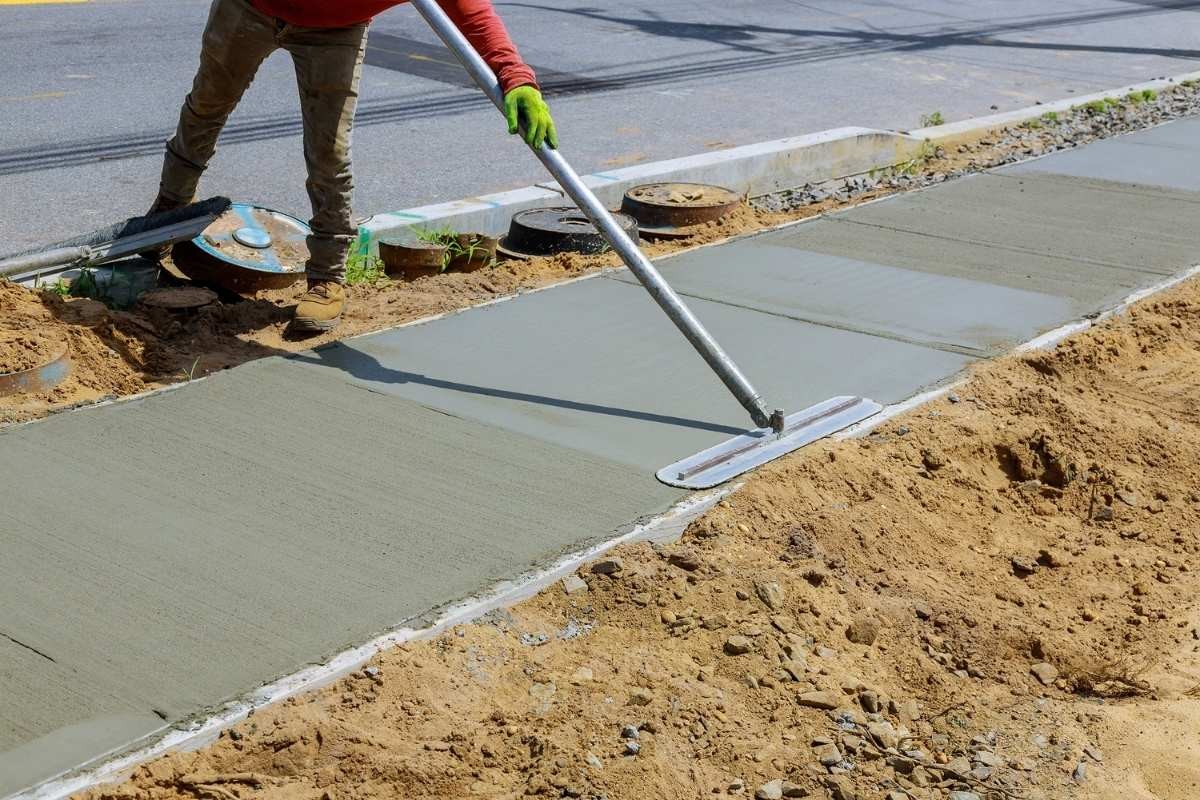
Fresh concrete is poured, leveled, and finished. A broom finish is commonly used for sidewalks because it provides better traction than a smooth surface. Control joints are added to help manage natural cracking. After the pour, the concrete needs time to cure before regular use.
How Long Does the Project Take?
Many residential sidewalk replacement projects can be completed in a short timeframe, depending on the size of the area and site conditions. A small walkway may take only a couple of workdays for removal, preparation, pouring, and finishing. Larger or more complex projects may take longer, especially if drainage correction, grading, or additional concrete work is needed.
Weather can also affect the schedule. Rain, extreme heat, or freezing temperatures may delay pouring or curing. A careful contractor will focus on proper conditions rather than rushing the work.
When Sidewalk Damage Connects to Bigger Property Issues
Sometimes a damaged sidewalk is part of a larger site problem. For example, poor drainage, slope movement, or erosion can affect walkways, patios, driveways, and yard areas. In these cases, replacing the sidewalk alone may not fully solve the issue.
If a property has a sloped yard or soil movement near the walkway, a retaining wall may help stabilize the area and manage elevation changes. Homeowners considering a concrete retaining wall in Essex County NJ may benefit from having both the sidewalk and surrounding grade evaluated together. This can lead to a safer, better-planned exterior improvement.
How to Help Your New Sidewalk Last Longer
After replacement, basic maintenance can help extend the life of the new concrete. Keep the surface clean, remove debris, monitor nearby tree roots, and avoid using harsh chemicals whenever possible. Make sure downspouts and landscape drainage do not direct water onto or under the sidewalk.
It is also wise to inspect the walkway after heavy storms or winter weather. Small changes in drainage, soil movement, or surface condition are easier to address early.
A Safer Walkway Starts With the Right Decision
Cracked or uneven concrete should not be ignored, especially when it creates a trip hazard or drainage problem. While repairs may work for minor surface damage, replacement is often the better choice when the sidewalk has shifted, settled, broken apart, or become unsafe.
A well-installed sidewalk improves more than appearance. It supports safer movement, better drainage, easier access, and stronger curb appeal. By addressing the real cause of the damage and choosing professional replacement when needed, homeowners can protect their property and create a walkway that is built to perform for years.