
When you are shopping with a toddler on your hip or a calendar full of commitments, it is tempting to choose furniture by looks alone. But the piece that looks great in a photo is not always the one that survives a year of kids. Knowing what to check can save you money and frustration.
Reading Coleman furniture reviews is one helpful step, since other parents often describe how pieces hold up over time. Here is a practical checklist you can use in a store or online to spot quality construction.
1. Check the Frame Material
The frame is the skeleton of any piece of furniture. Weak frames sag, wobble, and break.
- Solid hardwood: Oak, maple, walnut, and similar woods are strong and long-lasting.
- Kiln-dried wood: Drying removes moisture so the wood is less likely to warp or crack.
- Plywood: High-quality, multi-layer plywood can be very strong, especially in sofa frames.
- Particleboard and thin fiberboard: These are more likely to break down under stress and moisture.
If you care about responsible sourcing, look for wood certified by the Forest Stewardship Council.
2. Look at the Joints
How a piece is put together matters as much as what it is made of.
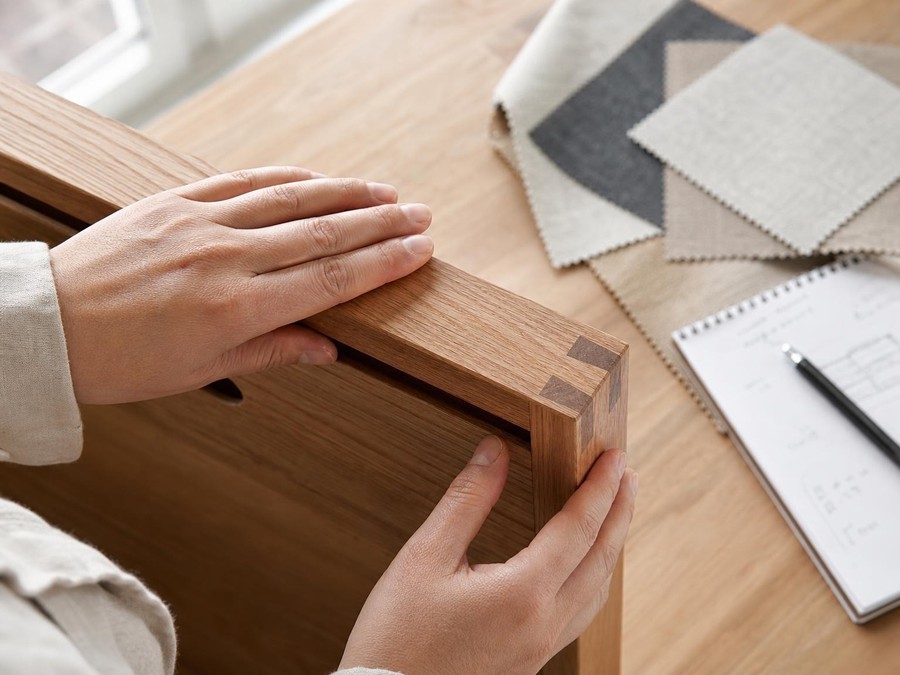
- Dovetail joints: Interlocking drawer corners that resist pulling apart.
- Mortise and tenon: A classic joint used in tables and chairs for strong connections.
- Corner blocks: Triangular supports in corners add stability.
- Screws and dowels: These hold better than staples or glue alone.
3. Test the Drawers
Open and close every drawer. They should slide smoothly and sit evenly, without sticking or rattling. Look for solid drawer bottoms rather than thin cardboard-like panels, and check that the sides are joined securely.
4. Give It a Shake
Gently push on the corner of a table, chair, or bookcase. A well-built piece feels solid. Excessive wobbling, creaking, or racking, where the piece leans sideways, suggests weak joints.
5. Examine the Upholstery
For sofas and chairs, the fabric and padding matter.
- Fabric weight and weave: A tighter weave resists snags and wear.
- Seams and stitching: Look for straight, even stitching and reinforced seams at stress points.
- Pattern matching: Lines and patterns that line up neatly are a sign of careful workmanship.
- Cushion density: Press on the cushions. They should bounce back and not feel flimsy.
- Removable covers: These make cleaning easier.
6. Check the Finish
A good finish protects the surface and looks even. Run your hand over the piece. It should feel smooth, without rough patches, bubbles, or drips. Finishes that resist water rings, scratches, and stains are especially valuable in a busy home.
7. Lift or Tilt It
Heft is often a sign of solid materials. Lift a corner or tilt the piece slightly. A heavier piece is not always better, but very lightweight furniture can mean thinner materials and weaker structure.
8. Inspect the Hardware
Handles, hinges, and glides should feel sturdy and move smoothly. Metal hardware tends to last longer than thin plastic, and floor glides protect both furniture and floors.
9. Read the Warranty and Care Instructions
A clear, reasonable warranty shows that a maker stands behind its product. Check what is covered, how long it lasts, and what you must do to keep it valid. Care instructions also tell you what the piece can and cannot handle.
10. Think Like a Parent
Before you buy, picture a typical week at your house.
- Will it survive jumping, climbing, and spills?
- Can the surface be wiped clean quickly?
- Are there sharp corners that could be an issue?
- Is it easy to anchor to a wall, if needed?
- Can you move it for cleaning?
A Quick Checklist to Save
- Solid frame
- Strong joints
- Smooth drawers
- No wobble
- Tight upholstery weave
- Even finish
- Sturdy hardware
- Clear warranty
Quality That Pays Off
Quality construction is about more than longevity. It means fewer replacements, fewer repairs, and fewer headaches. A little extra attention at the time of purchase can give you furniture that quietly does its job for years, which is exactly what a busy household needs.